In this guide
Quick answer
Learn how to read a biorhythm chart step by step: what the physical, emotional, intellectual and intuitive lines mean, how to spot peaks and critical days, and how to plan with them.
How to Read a Biorhythm Chart
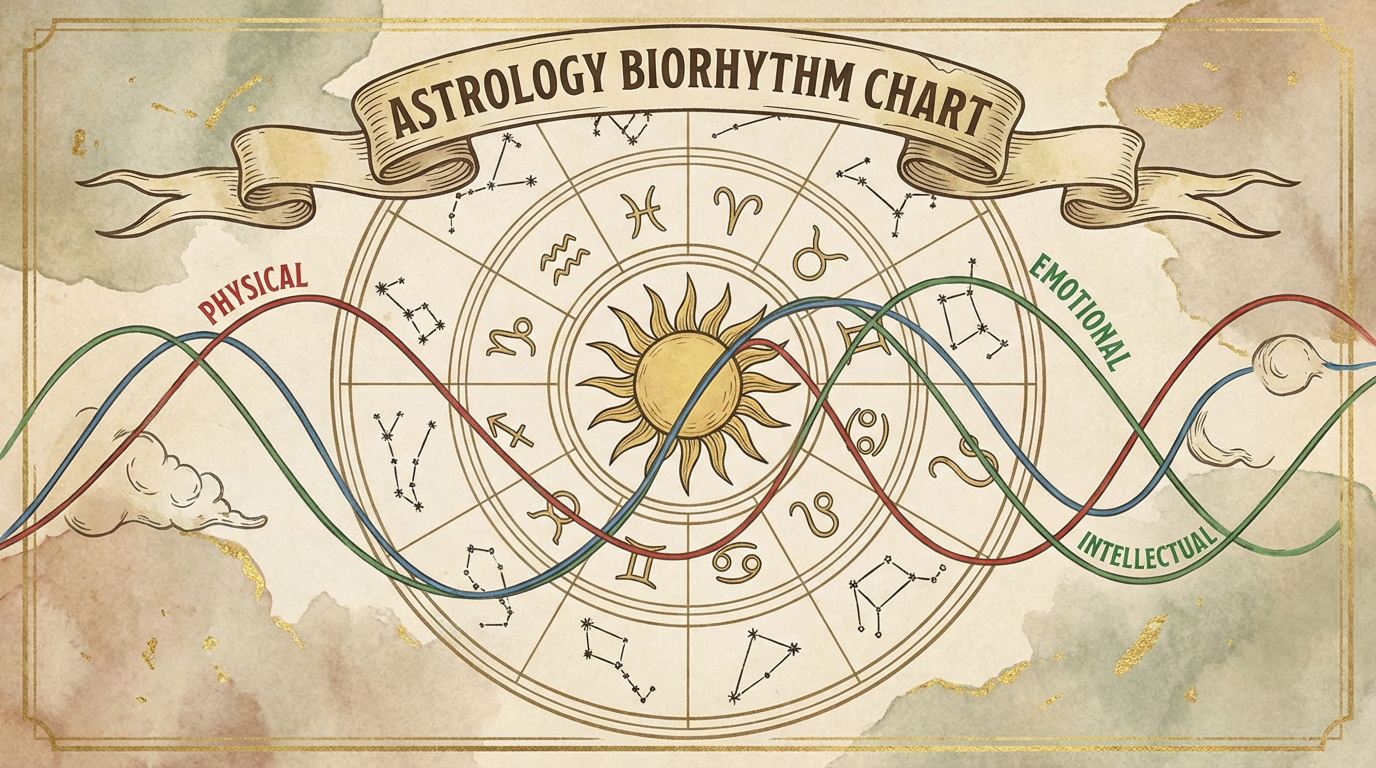
A biorhythm chart looks like four overlapping waves. Each wave is a cycle that started at zero on the day you were born and has repeated steadily ever since. Once you know what each line means, the chart becomes a simple guide to planning your week.
The four biorhythm cycles
| Cycle | Length | What it tracks | Best used for |
|---|---|---|---|
| Physical | 23 days | Strength, stamina, coordination | Training, physical work, travel |
| Emotional | 28 days | Mood, sensitivity, creativity | Relationships, creative work |
| Intellectual | 33 days | Memory, logic, focus | Exams, planning, negotiating |
| Intuitive | 38 days | Instinct, perception | Decisions under uncertainty |
Try it: your energy today
How biorhythms are calculated
The biorhythm calculation is simple: count the days since your birth, then for each cycle compute
value = sin(2π × days ÷ cycle length) × 100%
So on day 23, 46, 69 and so on, your physical cycle is back at zero and rising. Our biorhythm calculator does this for every day on the chart.
Reading the chart step by step
1. Find today
The highlighted column on the left is your start date. Read each line's height there: above zero is the active phase, below zero the recharge phase.
2. Look for peaks
A line near +100% is at its peak. Two lines peaking together, such as physical and emotional, make a strong day for anything that uses both, like a big presentation or a long hike with friends.
3. Spot the critical days
Where a line crosses zero is a critical day for that cycle. Biorhythm theory says these transitions are when you're least stable. Days when two lines cross together are called double critical days. Learn more in our guide to biorhythm critical days.
4. Plan around the lows
Lows aren't bad luck. They're a cue to schedule rest, routine work and recovery. Many athletes plan lighter training weeks around their physical low.
Using a biorhythm chart for luck
Many people look for a "biorhythm chart for luck". Biorhythms don't measure luck directly, but days when the intellectual and intuitive cycles peak together are popular for making bold decisions, and many people use the physical high for competitive events.
A note on science: controlled studies haven't found that biorhythms predict performance or accidents. Use the chart as a planning prompt and a way to reflect on your energy, not as a forecast.
Free daily email
Your horoscope, every morning
A 60-second reading for your sign, today's best muhurat and a new guide each week. Unsubscribe anytime.
Try it
Enter your birth date in the free biorhythm calculator for an interactive 31-day chart, today's levels, your best and recharge days, and upcoming critical days. You can also compare cycles with a partner: see biorhythm compatibility.